Boost Data Center Productivity with Hot Boxed Lunches for Large Scale Construction Projects

Large scale construction projects need reliable food service that keeps crews fed, close to the work, and on schedule. On a hyperscale data center build or major distribution hub project, workers cannot simply leave for a nearby restaurant. The site is secure, the schedule is tight, and every minute a tradesperson spends away from the work zone has a real cost.
When workers leave a secure perimeter for lunch, a 30-minute break can quickly become 75 minutes or more after badge checks, parking, traffic, and re-entry screening. Jerry’s Kitchen solves that problem with hot boxed lunches prepared in a commissary kitchen, delivered daily to the jobsite, reheated in on-site convection ovens, and served by local labor. There are no food trucks, no on-site chefs, and no kitchen infrastructure to build.
This article covers the unique demands of feeding large scale construction projects, how to plan a secure on-site meal program, and how to design menus that keep hard-working crews satisfied. It also explains how Jerry’s Kitchen supports corporate events and special functions on active sites and how to choose the right commissary-based catering partner for your next project.
The Unique Demands of Data Center and Industrial Catering
The U.S. data center sector is growing rapidly, with over 501,000 workers in 2023, up from 306,000 in 2016, and 159.2 GW of new capacity under construction across 38 states. Peak on-site workforces of 800 to 1,500 or more are common on a single campus. Food service for these organizations must deliver dependable high-volume meals that support operational efficiency, crew satisfaction, and safe, consistent service.
As expected, there are several unique challenges involved in industrial catering:
- Strict perimeter security. Your crew cannot simply step out the gate for a quick lunch when turnstiles, badge checks, and escorts are involved. A 30-minute break can easily become an hour or more away from the work. Across 1,000 workers, that can mean 500 labor hours lost in one break cycle.
- Rapidly changing headcounts. A site may start with 50 workers during early grading, exceed 1,500 during peak MEP installation, and drop to 300 during commissioning. The meal program must flex with each phase.
- Continuous multi-shift operations. Day, swing, and night crews all need dependable food. Breakfast at 5:30 a.m. matters as much as dinner at midnight.
- Limited or no kitchen infrastructure. Greenfield locations often lack water connections, permanent power, and dining halls. The commissary-to-site model eliminates an on-site kitchen buildout because meals arrive ready to reheat and serve.
- Compliance and documentation. Health and safety compliance is critical. Serving staff must meet site requirements for background checks, safety orientation, PPE, and alignment with the site-specific safety plan.
Designing a Hot Boxed Lunch Program for Secure Job Sites
An on-site meal program should be planned like any other critical trade package, with a schedule, a layout, and integration with site logistics. The objective is straightforward: feed crews on site without pulling resources away from the build.
- Commissary-to-site delivery. Jerry’s Kitchen prepares meals in a centralized commercial kitchen and delivers them daily to the jobsite. Meals arrive hot-packed or fresh-frozen, then are reheated on site in convection ovens. No on-site chefs, kitchen buildout, or utility tie-ins are required.
- Site layout planning. We work with superintendents to position serving lines outside crane swing radiuses, delivery corridors, and egress paths while keeping them inside the security perimeter. Crews can sit down to a hot meal steps from their work zone rather than walking half a mile.
- Traffic and queue management. Multiple serving points, directional signage, and staggered crew release times keep average wait times below five minutes per person. That helps prevent bottlenecks from consuming valuable break windows.
- Weather and seasonal planning. Tents, windbreaks, and covered serving areas help crews eat safely in rain, snow, and summer heat. Seasonal adjustments can be made without constructing new kitchen infrastructure.
- Flexibility for special occasions. The daily meal program can also support corporate events, topping-out ceremonies, and client functions. No additional kitchen buildout is needed.
Comparing On-Site Catering Options for Large Scale Construction Projects
Not every jobsite can justify a permanent cafeteria. Project leaders commonly compare several models before selecting the option that fits their timeline, workforce, and budget. Cost control depends on balancing meal quality with per-meal budgets, while operational efficiency comes from bulk purchasing, accurate forecasting, and waste reduction.
| Model | Pros | Cons |
|---|---|---|
| Fixed cafeteria | Climate control, permanent seating, stable oversight | High capital cost, permitting delays, and underuse when headcount drops |
| Cold boxed lunch drop-off | Simple logistics and predictable per-head cost | Monotony, waste from unused meals, no hot food, and low crew satisfaction |
| Food truck / mobile catering | On-site cooking, menu variety and usefulness in true food deserts with zero infrastructure | Requires fuel, water, generators, and backup units, with high operating cost and limited capacity at scale |
| Commissary-delivered hot meals (NJC model) | Hot meals with zero kitchen buildout, rapid scaling with headcount, consistent quality, lower per-meal cost, and local labor for serving | Requires a reliable daily logistics chain and is less suited to ultra-remote sites with no road access |
For most large scale construction projects, NJC’s commissary-delivered model is the best fit. It provides hot, high-quality meals at a fraction of the cost of a fixed cafeteria or a food truck fleet, and it can scale from 50 to 2,500 workers without adding kitchen infrastructure. For true food-desert locations, such as remote greenfield sites without commercial kitchens within driving distance, mobile catering may be a practical early-phase option until a dependable logistics route is established.
Menu Strategy: High-Protein Hot Boxed Lunches Built for Heavy Industry
On-site catering is about feeding people through long shifts with meals that are reliable, satisfying, and ready when breaks begin. Well-fed crews can stay focused, which is especially important on data center sites where a single wiring error can cost tens of thousands of dollars.
Workers completing physically demanding work need real, substantial food rather than a cold sandwich. Consistent menu planning ensures that every meal meets the same standards for quality, portioning, and flavor.
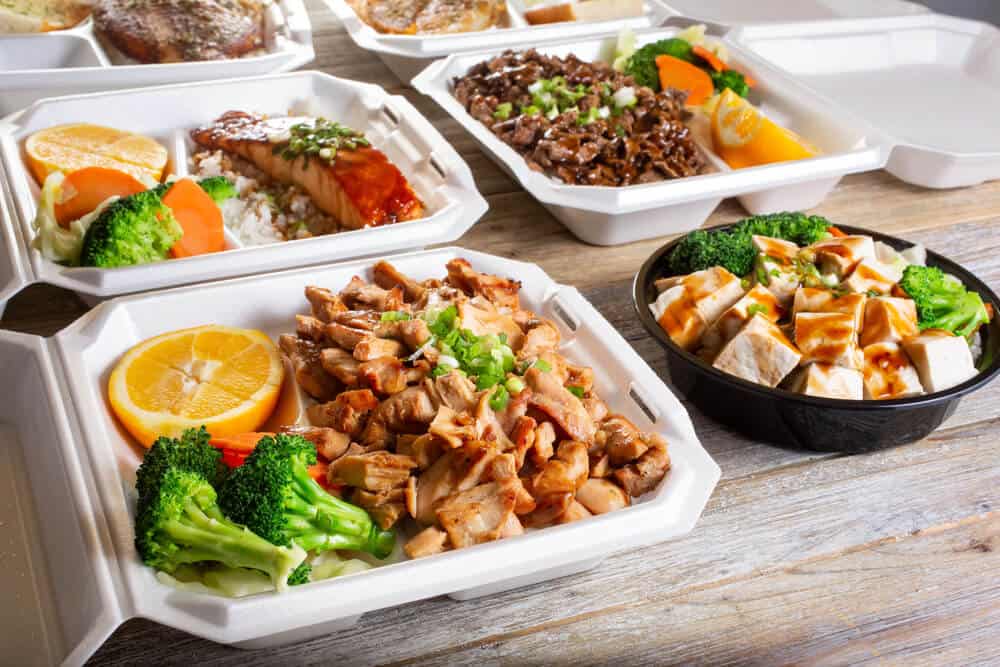
- High-protein, slow-burning meals. Menu options can include breakfast burritos with egg, bacon, and chorizo, roasted chicken over rice, smoked pulled pork with fresh bread, and beef stew on cold days. These are substantial meals prepared for people doing physical work.
- Seasonal menus. Summer rotations can feature lighter salads, grilled meats, fresh fruit, and cold drinks. Winter menus can include soups, chilis, cheese-topped baked dishes, and hearty desserts such as sweet bread pudding. Seasonal changes keep the program interesting throughout a multi-year build.
- Making sure there is something for everyone. Each menu rotation should include clearly labeled vegetarian, vegan, gluten-free, and halal options. No one should have to leave the site to find an appropriate meal.
- Grab-and-go versus sit-down meals. A hot boxed lunch provides a fast, quality meal when the break is short. When schedules allow, a buffet-style serving line with rotating options gives the crew more time to sit down and recharge.
- Corporate events and client walkthroughs. The same commissary kitchen that feeds the crew daily can prepare elevated menus for dedication ceremonies, product launches, and customer tours, including premium proteins and curated desserts.
Supporting Industrial Events: Training Sessions, Recognition Meals, and Milestone Parties
Feeding the crew is only part of the job. Industrial sites also host training classes, milestone celebrations, and ceremonies throughout the build cycle. Jerry’s Kitchen can provide the needed food service without disrupting active work.
- Training classes and safety seminars. Hot coffee, breakfast sandwiches, and simple lunches can be delivered and served efficiently outside modular training spaces. The service supports the schedule rather than interrupting it.
- Recognition meals. A catered meal is a meaningful way to recognize a zero-incident milestone or schedule achievement. A cookout-style spread with chicken, pulled pork, and dinner rolls feels more special than daily fare and can lift morale across the crew.
- Topping-out ceremonies and ribbon cuttings. These functions combine industrial catering reliability with event-style service appropriate for company directors, clients, and outside guests.
- Team-building events. Shared meals such as taco bars, burger spreads, or BBQ service near laydown areas can mark the completion of a major phase. These events help create the kind of work environment that encourages skilled workers to return.
Scaling Hot Boxed Lunches From 50 to 2,500 Workers Across Multiple Shifts
A site with thousands of workers needs meal service that does not become a logistics nightmare. A large data center campus may have a day shift of 1,200 people and a night shift of 400 to 600, all needing dependable food.
The commissary model makes this manageable because production scales at the kitchen, not on the jobsite.
- Forecasting headcount. Each week, Jerry’s Kitchen coordinates with superintendents and trade foremen to confirm meal counts. If a crew is expected to be 800 on Monday and declines to 400 by Friday because of a phase change, production and delivery quantities can be adjusted to reduce waste without leaving anyone hungry.
- Multiple serving points. Large sites should not require everyone to walk to one central location. Multiple serving stations across site zones reduce walking time and help protect break periods.
- 24/7 readiness. Industrial meal service must adapt to night work, bad weather, and unexpected schedule changes. Jerry’s Kitchen maintains backup logistics and inventory to help ensure the crew does not go without a meal.
- One vendor for daily meals and events. Consolidating food services under one partner lets project teams focus on core operations. The same partner that feeds the crew daily can support a milestone lunch or client visit without requiring a separate vendor.

Choosing an Industrial Catering Partner for Your Next Project
Not every caterer is equipped for industrial or high-security work. Select a partner with experience on large scale construction projects rather than a vendor focused only on weddings or private parties. In America’s construction industry, keeping workers fed and satisfied is an important part of supporting retention and project continuity.
- Experience with large scale construction. Look for a provider that has worked on data center builds, manufacturing plants, or major infrastructure projects. Its team should understand the realities of an active jobsite.
- Safety and compliance. The vendor should carry appropriate insurance, train serving staff on OSHA basics, follow PPE requirements, and integrate with your site safety program. These are baseline expectations.
- Production capacity, logistics reach, and scaling ability. Ask about the commissary operation. Can it produce 1,000 or more meals per day, deliver reliably across the required distance, and scale up or down with changing headcounts? Strong production infrastructure and a dependable delivery network are essential.
- Coverage and responsiveness. Jerry’s Kitchen can deploy consistent meal programs across the country while respecting local regulations and sourcing needs. The program must remain responsive as schedules and workforce counts change.
- Planning support. Choose a partner with a clear plan and a dedicated point of contact for last-minute adjustments. The right vendor works as a project partner, not simply as a drop-off service.
From Groundbreaking to Handover: How Jerry’s Kitchen Keeps Your Site Running Smoothly
Hot boxed lunches delivered through NJC help minimize downtime, support morale, promote orderly break periods, and keep schedules on track. When clients see a well-organized site with crews who are fed close to the work, it reflects well on the entire project.
- Lifecycle engagement. Jerry’s Kitchen begins with a consultation before groundbreaking, ramps up during peak activity, and scales back as the site transitions into commissioning or maintenance mode. The plan is tailored to the project rather than drawn from a generic template.
- Beyond construction. After the build is complete, Jerry’s Kitchen can support corporate events, new tenant move-ins, and ongoing events at the finished facility.
- Your next project. Whether the need is daily hot boxed lunches for 2,000 workers or a one-time ribbon cutting, Jerry’s Kitchen provides the service and coordination expected of a construction partner.
- Get in touch. Contact Jerry’s Kitchen today for a custom quote. Share your timeline and workforce size, and we can help build a meal program that works for your project.



Find us