Why Are Food Trucks Better Than Restaurants? 7 Reasons
In recent years, food trucks have done more than just trend; they’ve transformed the food industry. What used to be seen as casual street food is now a serious business model, especially when it comes to catering.
Compared to the high costs and limitations of a traditional restaurant, food trucks offer a more flexible, lower-cost, and customer-focused experience.
The food truck vs restaurant debate is heating up, and if you ask me, mobility wins.
Here’s why more food entrepreneurs are ditching brick-and-mortar and going mobile for catering success.
Why Are Food Trucks Better Than Restaurants
1. Lower Overhead Costs
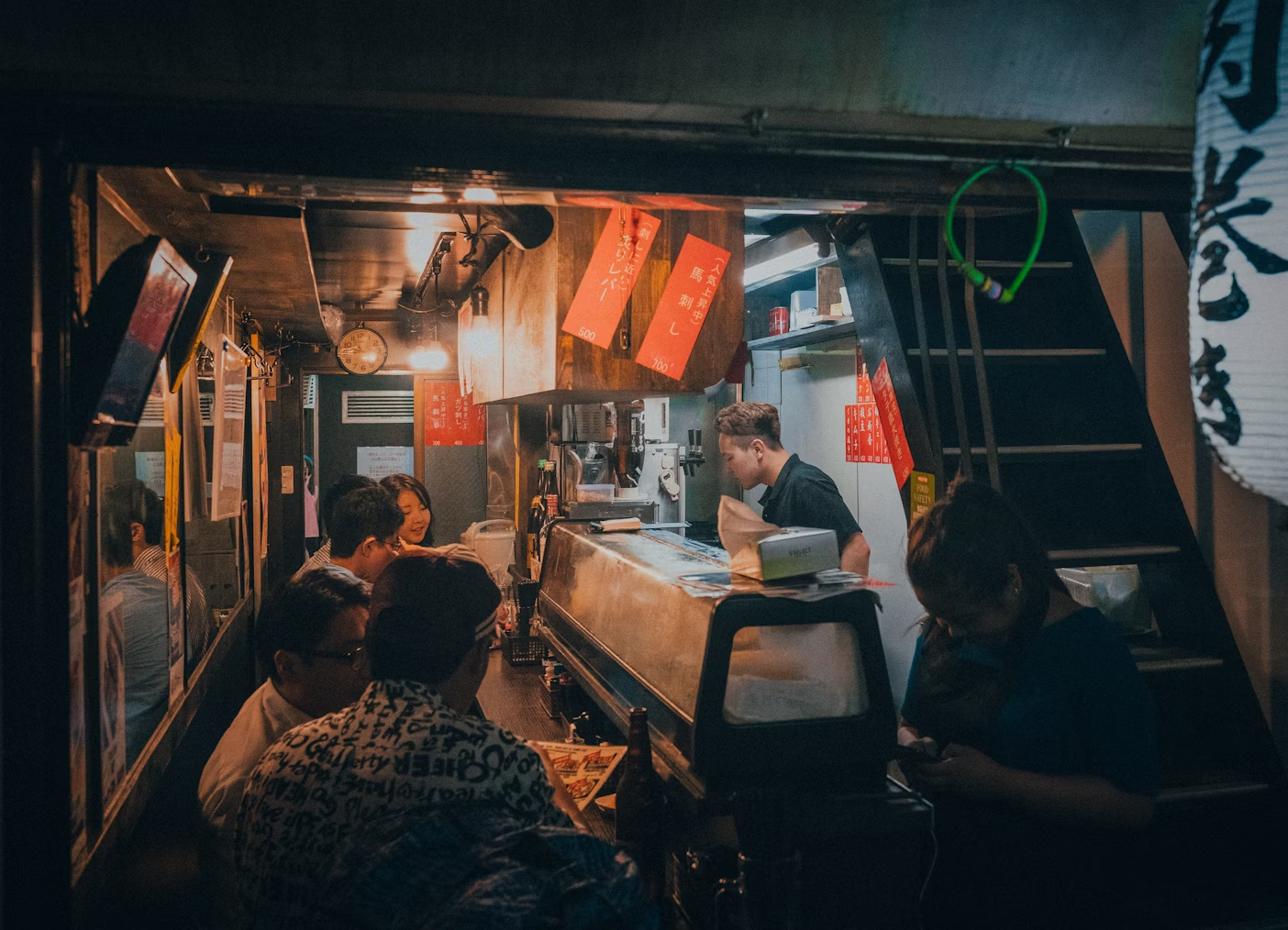
One of the biggest reasons I chose a food truck over opening another restaurant was the cost. With a truck, you avoid massive expenses like rent, utilities for a large space, and outfitting a full dining room.
You don’t need a huge staff, and you’re not locked into a long lease or drowning in maintenance fees. Your money goes where it counts: kitchen equipment, ingredients, and serving great food.
Restaurants incur a long list of fixed costs that continue to accumulate. A food truck, on the other hand, gives you a chance to start strong with a lower startup cost and less financial risk.
2. Flexibility & Mobility
Here’s where food trucks truly shine: we’re not confined to one physical location. If business is slow in one area, we pack up and change locations.
Got a street festival, corporate event, or farmer’s market across town? We’re there. This type of mobility enables us to follow foot traffic and meet customer demand in real-time. Unlike a mortar restaurant, which relies on people coming to them, we go where the people are.
It’s like having a mobile kitchen that adapts to what’s happening in the city. That kind of flexibility gives us a huge edge in catering and event-based service.
3. Targeted Customer Base
One of the best parts of running a food truck business is getting to choose who we serve and where. We can park in high-traffic areas, office parks, street fairs, or at wedding venues where people are hungry and ready to eat.
That’s a huge contrast to restaurants, which rely heavily on regular customers and a fixed physical location. With a truck, we’re not waiting for people to walk in; we go to them.
This approach gives us access to a wider variety of customers and events, making it easier to build a loyal customer base that fits our brand and food style.
4. Faster Service & Unique Offerings
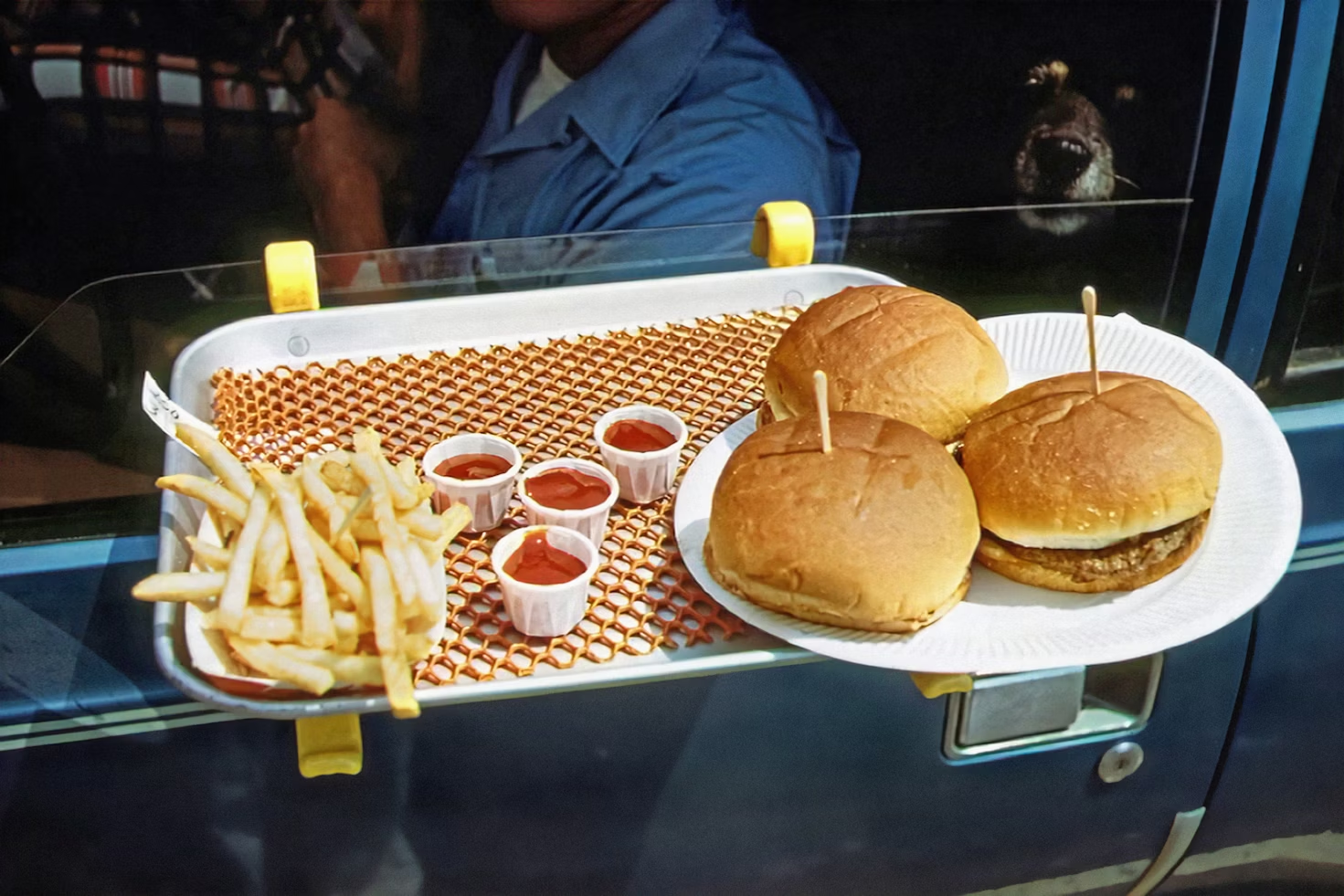
Food trucks are built for speed. With smaller menus and streamlined setups, we serve delicious meals fast, with no long wait times, no reservations, just quick, satisfying bites.
That’s a big win for catering, where timing matters. Plus, we’re not boxed into restaurant concepts. We experiment with fusion cuisines, bold flavors, and creative menu offerings that stand out.
From Korean BBQ tacos to gourmet grilled cheese, food trucks deliver culinary experiences people remember. Unlike regular restaurants with more extensive menus and slower turnaround, we focus on what we do best and do it quickly. It’s all about flavor, fun, and fast service.
5. Adaptability to Trends
In the food truck industry, we don’t wait months to roll out new ideas; we pivot fast. That’s one of the biggest perks over the restaurant business, which often needs careful planning and big investments to make changes. With a food truck, adapting is part of the game.
Here’s how we stay ahead:
- Test new menu items on the fly.
- Swap ingredients based on season or demand.
- Try out ghost kitchen concepts without a full buildout.
- Join trend-driven events (like vegan fests or cultural pop-ups).
- Follow food trends without overhauling the whole business plan.
It’s flexibility in action, and it keeps us competitive.
6. Lower Staffing & Operational Hassles
Running a food truck means fewer moving parts and fewer headaches. You don’t need a full crew of line cooks, hosts, servers, and bussers.
A tight, skilled team of two or three can keep things running smoothly. No need to worry about interior design, dining room upkeep, or managing a large space.
With a smaller space and controlled environment, everything’s within reach. Yes, we deal with limited space, but we make it work with smart layouts and efficient systems. And when it comes to bad weather, smart planning and the right event setups keep things on track. Simpler operations mean fewer fires to put out.
7. Higher Profit Margins
At the end of the day, it’s about profit, and food trucks are built for it. With lower overhead costs, fewer employees, and less waste, we keep more of what we earn.
We’re not spending thousands each month on real estate, utilities, or front-of-house staff. That means more money goes back into the business or into your pocket. Take ice cream trucks in extreme heat, minimal setup, quick service, and high demand, equals real profit.
By focusing on tight menu items and efficient service, food truck owners can maximize every dollar. For many, it’s a better business model than a full-scale restaurant in the long run.
Addressing the Cons of Food Trucks
Now, let’s be real, running a food truck isn’t all sunshine and sold-out lunch hours. There are challenges, and anyone who tells you otherwise hasn’t done the work.
But here’s the thing: while the grind is real, the rewards still outweigh the struggles, especially compared to the normal restaurant business.
Some common challenges include:
- Weather Conditions: Rain, wind, or extreme cold can impact foot traffic and sales. But with strategic planning and indoor event bookings, this can be managed.
- Long Hours: It’s a hustle. You’re not just the chef, you’re also the driver, marketer, and cleaner. Still, the freedom and ownership make it worth it.
- Limited Space: Yes, space is tight. But tight means efficient. Every inch of a mobile kitchen is used with purpose.
- Regulations & Permits: There’s red tape, but it’s no worse than opening a restaurant location. With a solid business plan, you’ll get through it just fine.
Ultimately, if you’re willing to put in the hard work, a food truck offers more control, lower risk, and a unique way to connect with your customer base. I’d take that trade any day.
Addressing the Cons of Food Trucks
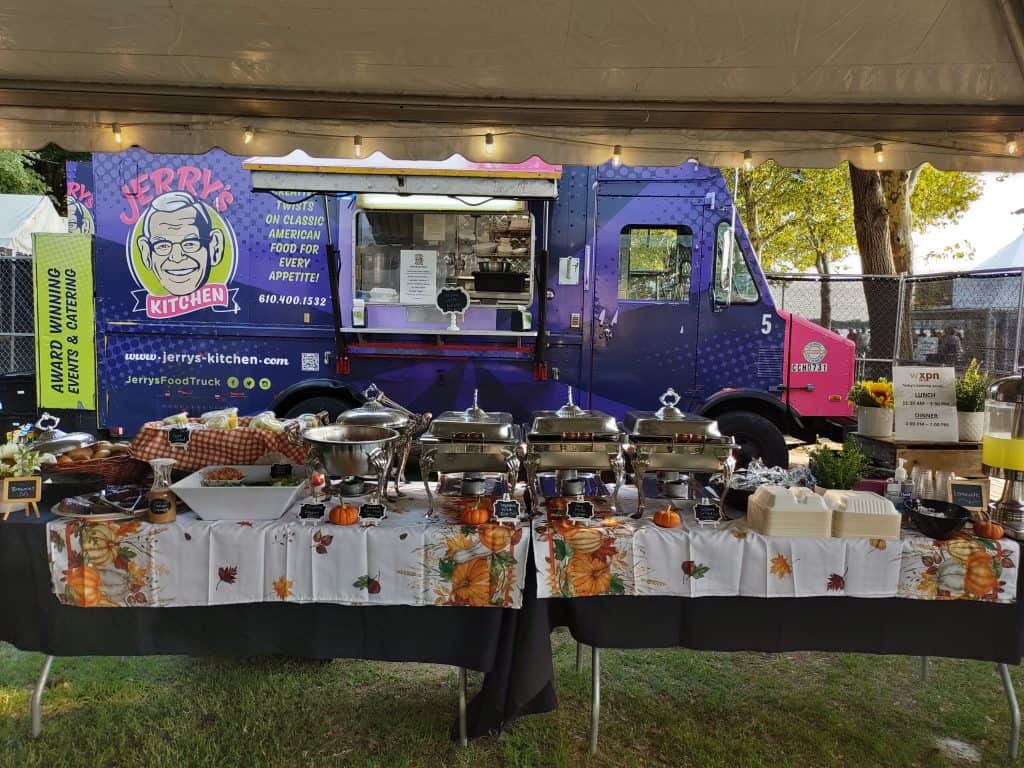
Thinking about launching your own food truck or need an experienced team to cater your next event? Let’s talk. At Jerry’s Kitchen, we’ve spent years perfecting the mobile catering game from menu planning and kitchen equipment setup to getting permits and delivering unforgettable food experiences.
Whether you’re planning a wedding, corporate lunch, or local festival in the Philadelphia area, our team brings the flavor and professionalism every time. We’re not just another truck; we’re a trusted partner in the food truck industry.
Want to own your own Jerry’s Kitchen? We help aspiring entrepreneurs get started with their own mobile business. Sign up here to take the first step toward running a food truck you’ll be proud of.
Conclusion
If you’re looking for a better business model for catering, food trucks clearly come out ahead with lower cost, more flexibility, and a direct connection with your customer base. For aspiring entrepreneurs, it’s a smart, rewarding path in the food industry.
Based in Philadelphia, PA, we specialize in food truck catering for private events, corporate functions, and weddings. If you’re ready to launch your own food truck or need top-tier catering, we’re here to help. Contact us now.
Philadelphia and Washington. Book us now.
Philadelphia: 610-400-1532
Washington, DC: 703-576-5284






Find us